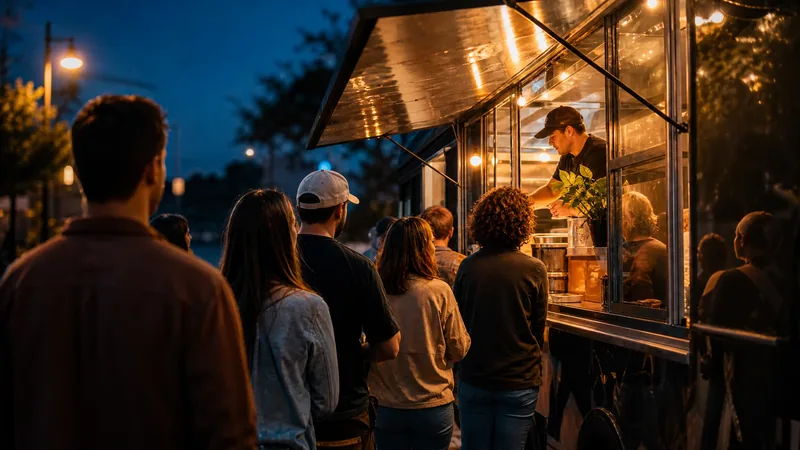
How to Start a Food Truck in Vermont: One State Commercial Caterer License ($260), Temporary Stand Licenses ($125 or $230) and the Meals Tax
How to Start a Food Truck in Vermont: One State Commercial Caterer License ($260), Temporary Stand Licenses ($125 or $230) and the Meals Tax
Vermont has no general state business license, so starting a food truck here means stacking the right pieces: register your business, open a Department of Taxes account, and add the license that matches your equipment. For a truck, trailer or push cart, that usually means one state Commercial Caterer license at $260 per year, a meals tax registration, and permission from each town where you plan to operate. This guide covers the order of steps, the costs and the mistakes that cause the most delays.
This article is informational content, not legal or tax advice. Before you sign a lease, buy a vehicle or choose a business structure, talk with a Vermont attorney or CPA, especially if you plan to serve alcohol or run more than one unit.
Materials and Equipment Checklist
Gather these items before you file anything. Most food truck licensing delays come from missing documents, not from the state turning down an application.
- A finished menu listing each item and its main ingredients, since the Health Department reviews it with your application
- A current DMV registration for the vehicle, or for the trailer or cart you tow or push
- Fresh water and wastewater capacity: at least 30 gallons of fresh water and 35 gallons of wastewater for a truck or trailer, and 6 gallons of fresh water and 7 gallons of wastewater for a push cart
- A handwash sink and a three-bay sink installed on the unit
- Documentation of your water source and wastewater disposal, including a well-water test if you draw water from a well
- A prep kitchen, plus its own commercial caterer or Home Caterer license if you prep there
- A federal Employer Identification Number if you form an LLC or hire employees
- A calendar of the fairs, markets and locations you expect to serve, so you can check each town's rules
Step 1: Decide Whether to Form an LLC
You can operate as a sole proprietor and skip the Secretary of State formation filing. Many operators form an LLC anyway to separate business and personal liability. To form one, file Articles of Organization with the Vermont Secretary of State, Business Services Division, through the Online Business Service Center. The filing fee is $155. Online filings are normally processed in less than 1 business day, while mailed filings take 7 to 10 business days, so online is the practical choice.
Three rules catch first-time filers:
- Name designator. The name must end with Limited Liability Company, LLC, Ltd. Liability Co., Limited Company, LC or Ltd. Co. A name can be reserved for $25 for 120 days, and the reservation is renewable.
- Registered agent. Every Vermont LLC must keep an agent for service of process on file, with a name, email and address, plus a designated office that can be located outside Vermont. The agent must be a Vermont resident individual or a business with a place of business in Vermont and authority to do business there. A change of agent costs $35 for an LLC.
- Annual report and entity tax. The LLC annual report costs $45 and is due by March 31 for a calendar-year LLC. An LLC taxed as a partnership or S corporation owes a minimum annual entity tax of $250, paid with Form BI-471 or BI-476. A disregarded single-member LLC does not owe it. Confirm your tax treatment with a CPA.
Step 2: Open Your Department of Taxes Account
Register for a business tax account with the Vermont Department of Taxes at tax.vermont.gov. The account is free. A food truck needs it because the meals tax applies to what you sell (covered in Step 8). Register at least one day before your first sale, even if your first event is a single weekend.
Step 3: Build the Unit to the Health Department Specifications
Set up the vehicle before you schedule the opening inspection. Your unit needs a current DMV registration, the water capacities listed in the checklist, a handwash sink for staff, and a three-bay sink for washing, rinsing and sanitizing equipment. Do not treat these as cosmetic details. A unit that fails the opening inspection must be corrected and re-inspected, which can push back your first service date. Check the Health Department requirements before you buy a generator, sinks or a used truck, because retrofitting is more expensive than specifying the right equipment at the start.
Step 4: Apply for the State Commercial Caterer License
The Commercial Caterer license costs $260 per year. It covers food trucks, trailers, push carts, takeout-only operations with no seating, and off-site caterers under 18 V.S.A. 4353, administered by the Vermont Department of Health. Follow this sequence:
- Submit your application at least 30 days before your opening date, with the menu, well-water test and wastewater documentation.
- Schedule and pass the opening inspection. Do not serve the public before the license is issued.
- Renew each year and keep the license current even if you operate only seasonally. A lapse in the off-season can stop you from opening on the first warm weekend.
The license is not transferable. If you run a shared kitchen or partner with another operator, each operator must hold a license in their own name.
Step 5: License Your Prep Kitchen
Most food trucks prep somewhere other than the vehicle. That prep space needs its own license: a commercial caterer license or a Home Caterer license, which costs $155. If you use a commissary or shared kitchen, ask the operator whether the kitchen holds its own license and whether you need to be licensed separately to use it.
Step 6: Add Temporary Stand Licenses for Fairs and Markets
A tent and table at a fair or market is a temporary stand, not a truck, and it needs its own license. Choose the license that fits your schedule:
- Single event, $125. Covers one event lasting two to three days.
- Calendar year, $230. Covers four or more days of operation and expires December 31.
Apply at least 15 days before your first event. Each stand needs its own license, and all food preparation for a temporary stand must happen on site. If you prep at a commercial kitchen and bring finished food to a tent, a temporary stand license alone will not cover that setup, so confirm the arrangement with the Health Department before the event.
Step 7: Check Specialty Food Rules with the Agency of Agriculture
Free samples generally need no license. Some products, however, fall under the Agency of Agriculture, Food and Markets. If you sell meat, dairy, maple, honey or produce, contact the Agency before your first sale. Two fees to know now are the $15 fee for prepackaged meat sold at farmers markets and the $75 license for a frozen dessert or creemee operation. Confirm these figures with the Agency before you budget, since product categories can change which license applies.
Step 8: Understand the Meals Tax
Vermont's 6% sales tax applies to goods and a short list of items, and it reaches almost no services. Prepared food is different. Trucks and carts count as restaurants, so prepared food, coffee, bakery items eaten on the spot and catering fall under the 9% meals and rooms tax. Alcohol is taxed at 10%, and 50 towns add a 1% local option tax on top. Keep these points in mind:
- Booth fees are not taxed unless you rent tables or chairs to the organizer or customers.
- Event admissions you collect are taxable.
- You owe the meals tax even at a single event, so the registration in Step 2 must be in place first.
- The resale exemption works through Form S-3, which your buyer gives you, not through your own sales tax account number. Ask the Department of Taxes whether it applies to any goods you buy for resale.
Step 9: Check Local Rules in Every Town You Plan to Serve
Your state license does not give you the right to park anywhere. Vermont has 14 counties, but they have no licensing or zoning role. Towns, cities and villages control zoning and local vending, sidewalk and food cart rules, and those rules differ widely. Contact the town clerk or the selectboard for each location before you commit to a regular route. Ask specifically about vending permission, where you may park, hours and any required fees, and get the answers in writing.
Step 10: Confirm Alcohol Licensing Early
If you want to serve beer or wine, check eligibility before you buy equipment. The Department of Liquor and Lottery offers a caterer's license for $250, but only first-class license holders qualify. Alcohol also carries the 10% meals tax rate described in Step 8.
Fee Summary
| Item | Cost | Notes |
|---|---|---|
| LLC Articles of Organization | $155 | Online filings normally processed in less than 1 business day |
| LLC name reservation | $25 | Reserved for 120 days, renewable |
| Commercial Caterer license | $260 per year | Trucks, trailers, push carts |
| Prep kitchen license | $155 | Commercial caterer or Home Caterer |
| Temporary stand, single event | $125 | Two to three days |
| Temporary stand, calendar year | $230 | Four or more days, expires December 31 |
| Change of registered agent (LLC) | $35 | Statement of Change |
| LLC annual report | $45 | Due March 31 for a calendar-year LLC |
| Minimum entity tax | $250 | LLCs taxed as partnerships or S corporations; not disregarded single-member LLCs |
| Caterer's license (alcohol) | $250 | First-class license holders only |
| Meals tax | 9% | 10% on alcohol, plus 1% in 50 local option towns |
Common Mistakes to Avoid
- Letting the license lapse over winter. Keep the $260 license current even if you do not operate until spring.
- Assuming one license covers everything. A truck, a prep kitchen and a tent at a market each need their own license.
- Missing the lead times. Apply at least 30 days before opening for the Commercial Caterer license and at least 15 days before a temporary stand's first event.
- Skipping the meals tax registration. A free account is still required for a one-day event, and it must be in place at least one day before you sell.
- Trying to transfer a license. Licenses are not transferable, so a new operator in a shared kitchen needs a license in their own name.
- Selling cottage food to licensed businesses. Cottage food cannot be sold to licensed establishments, so do not plan wholesale accounts around home-prepared products.
- Forgetting the LLC annual report. A missed annual report terminates the entity. Vermont does not use administrative dissolution, and a terminated entity can be reinstated, but the cleaner path is to file the $45 report by March 31.
- Treating a state license as parking permission. Confirm local vending and parking rules town by town.
What Results to Expect
No license guarantees sales, and no agency promises a particular income from a food truck. A complete application may help you open on schedule and avoid delays. A passed opening inspection shows that your unit met requirements on the day it was inspected. Consistent cleaning, temperature control and written records may help reduce the risk of a food safety problem, though no operator can promise that outcome. Build your budget on conservative sales estimates, and plan for the off-season months when a lapsed license or a slow market can cost you the most.
Official Resources
- Vermont Secretary of State, Business Services Division
- Online Business Service Center for filing Articles of Organization
- Business search to check name availability
- Secretary of State fees and statutes
- Vermont Department of Taxes
- Business tax account registration
- Vermont Small Business Development Center for free planning help
- U.S. Small Business Administration, Vermont district
Final Checklist
- Form the LLC or confirm sole proprietorship, and appoint a registered agent if you form an LLC.
- Open the Department of Taxes account and meals registration.
- Equip the unit with a handwash sink, a three-bay sink and the required water capacity.
- Apply for the $260 Commercial Caterer license at least 30 days before opening, and pass the opening inspection.
- License your prep kitchen at $155 if you prep off the truck.
- Apply for temporary stand licenses at least 15 days before each fair or market.
- Check Agency of Agriculture rules for specialty products.
- Confirm local vending and parking rules with each town clerk or selectboard.
This article is informational content, not legal or tax advice. Confirm current fees, forms and requirements with the named agency, and consult a qualified attorney or CPA for your situation.
Keep exploring: related Vermont guides
- How to Start a Food Manufacturing Business in Vermont
- How to Start a Coffee Shop Business in Vermont
- How to Start a Restaurant in Vermont
- How to Start a Cheese Making or Creamery Business in Vermont
- How to Start an LLC in Vermont
- Vermont Business License
- How Much Does It Cost to Start a Business in Vermont
- All Vermont business types
- Every Vermont guide in one place